
Why Your Neck and Shoulders Feel Like a Rock by 3 p.m.
Have you ever turned your head after a long day at your desk and suddenly felt a sharp, pulling pain in the back of your neck? Or noticed your shoulders feel like heavy stones by mid‑afternoon, making it hard to focus? For many desk workers and students, this kind of “tech neck” and shoulder tightness has become a daily routine rather than an exception.
The problem is that we often try to fix it by briefly rubbing the painful area or rolling our neck a few times. That may feel good for a few minutes, but the stiffness quickly comes back. To make a real difference, you need a short, structured routine that warms up the muscles, restores your neck’s natural curve, and opens up the shoulders and upper back.
Below is a 15‑minute neck and shoulder stretch routine you can do at home, on your bed, or next to your desk. Clinical guidelines for neck pain generally recommend regular stretching and posture breaks rather than complete rest, especially for people who sit for long periods. This routine follows those principles in a practical way for everyday desk workers.
Gentle Warm‑Up: Loosen Up Before You Stretch
Before you jump into deeper stretches, it helps to warm up the tissues around your neck and shoulders. If you are at home, place a warm towel or heat pack over your neck and shoulder area for about 3–5 minutes. The warmth increases blood flow and helps tight muscles relax, so the following stretches feel more comfortable.
After warming up, sit or stand upright and take a deep breath in while lifting your shoulders up toward your ears. As you exhale, let your shoulders drop down completely, as if you are letting them fall away from your ears. Repeat this relaxed shrug about 10 times, coordinating the movement with your breathing. This simple step tells your nervous system, “It’s okay to let go of tension here.”
Now sit tall on a chair with your feet flat on the floor. Gently tuck your chin in, as if you are making a slight double chin, to create a sense of length in the back of your neck. From this position, slowly nod your head forward and backward within a comfortable range. Hold each end position for about 10 seconds, breathing steadily. If one direction feels much tighter, move more slowly and reduce the range on that side. Many people notice that even this small movement already starts to unlock tension around the base of the skull and upper neck.

Restore the Neck’s Natural C‑Curve
One of the key issues in tech neck is that the natural C‑shaped curve of the neck gradually straightens or even reverses from constantly looking down or jutting the head forward. Over time, this can load the joints and muscles in the wrong way and contribute to persistent stiffness.
To gently remind your neck of its natural curve, stand with your back against a wall. Try to touch the back of your head, your shoulder blades, and your pelvis to the wall. Then lightly tuck your chin again so that the back of your head makes contact without forcing your neck. From here, slowly tilt your head backward, allowing the front of your neck to open. You should feel a comfortable stretch along the front of the throat and the upper chest, not a sharp pinch in the back of the neck. Hold this position for 10–20 seconds, then come back to neutral and relax.
Next, interlace your fingers and place your hands on the back of your head. As you exhale, let the weight of your hands gently guide your chin toward your chest, stretching the back of your neck. You are not trying to yank your head down; imagine you are simply adding a bit of extra weight to assist the stretch. A strong but pleasant pulling sensation is fine, but if you feel any sharp, electric, or shooting pain, immediately ease off and decrease the range.
These neck‑focused stretches can be done several times throughout the day. Research on office workers with neck pain suggests that short, frequent bouts of stretching and posture correction are more helpful than doing nothing or only moving once at the end of the day.
Open the Shoulders and Upper Back
If you only stretch your neck, it may feel good for a moment but tighten up again quickly. That is because the muscles of your shoulders and upper back often share the workload with your neck. To get lasting relief, you need to invite them into the routine as well.
Start by standing or sitting with a straight spine. Place your fingertips lightly on your shoulders. Draw large, slow circles with your elbows—first forward and up and then back and down, as if you are stirring the air with your elbows. After 8–10 circles, reverse the direction. As you move, keep your breathing relaxed and notice how the front of your chest and the back of your shoulders both begin to loosen.
Next, interlace your fingers behind your back. Gently straighten your elbows and lift your hands slightly away from your body while you open your chest. Imagine the front of your shoulders moving backward and down away from your ears. You should feel a stretch across the front of your chest and shoulders, an area that often becomes tight from hunching over a laptop or phone.
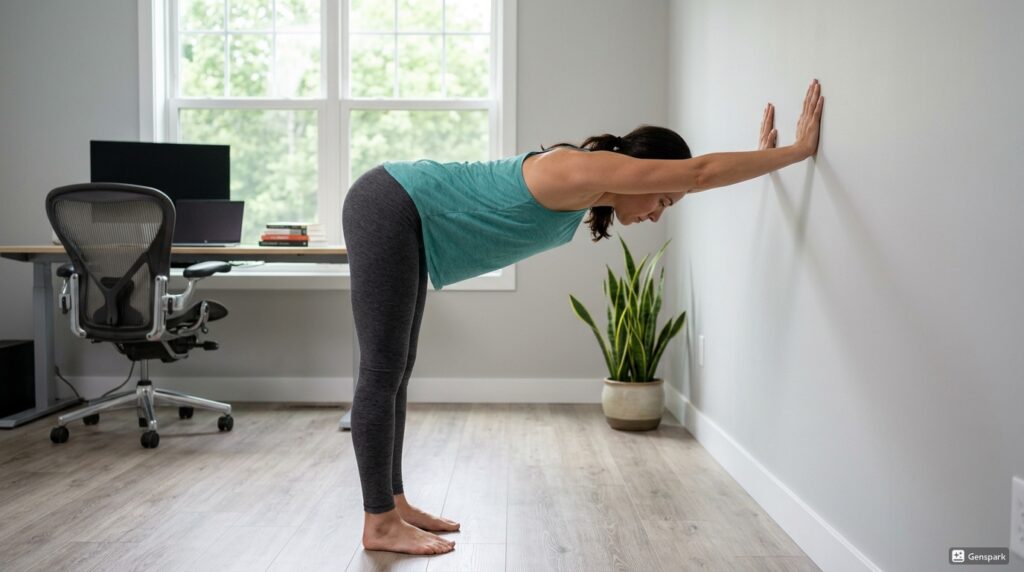
To connect your shoulders and upper back even more, stand facing a wall and place your hands on it at about shoulder height. Take a small step backward, then hinge at your hips, sending your hips behind you as you lower your chest toward the floor. Your arms, shoulders, and upper back should form a long line, similar to a standing child’s pose. Hold for 20–30 seconds, breathing calmly. This position can create a deep feeling of length through the arms, armpits, and along the spine, which many people find very relieving after long computer sessions.
Done together, these movements easily fill about 15 minutes and form a complete neck‑and‑shoulder routine you can repeat at home, in your dorm room, or even beside your desk.
How Often Should You Do This Routine?
The routine above is designed to:
- Warm up the neck and shoulder area
- Restore a healthier neck curve
- Increase mobility through the shoulders and upper back
If you are dealing with regular stiffness, aim to do the full 15‑minute routine once a day, and sprinkle in shorter “mini‑sets” (for example, shoulder shrugs or chin tucks) during screen breaks. Observational studies and clinical advice for desk workers with neck pain consistently encourage frequent posture changes and simple stretching rather than staying frozen in one position for hours at a time.
On days when you have more time, you can turn this into a 30‑minute session by repeating the sequence twice. Just remember that quality matters more than intensity; the goal is to move with awareness, breathe steadily, and stay well within a comfortable range.
Safety Notes
If you have severe neck pain, radiating pain into your arms, numbness, or a diagnosed spine condition, talk with a doctor, physical therapist, or other qualified professional before starting a new routine. If any stretch causes sharp, burning, or electric‑like pain, stop immediately and return to a gentler position.
For most people with mild to moderate stiffness from sitting, however, gentle stretching combined with posture breaks is considered a safe and useful strategy to manage discomfort.
Further Reading
If you would like to explore more, these resources summarize general medical advice on neck pain and desk‑related posture problems:
- National or hospital health information pages on neck pain and posture recommendations (for example, large university or teaching hospitals often provide patient‑friendly guides).
- Public health portals that explain how regular movement, stretching, and ergonomic changes can reduce neck and shoulder symptoms in people who sit for long periods.
FAQ: Neck and shoulder stretch routine for desk workers
Q1. How often should I do this neck and shoulder stretch routine?
For most desk workers and students, doing the full 15-minute routine once a day is a good starting point. On busy days, you can still benefit from shorter “mini sets” of 1–3 stretches during screen breaks, especially when your neck or shoulders start to feel tight.
Q2. What if I feel pain or dizziness while moving my neck?
Gentle pulling or mild soreness is normal when tight muscles start to move, but sharp pain, burning, electric sensations, or dizziness are warning signs. If you notice these symptoms, stop the exercise, return to a neutral position, and rest. If they do not improve or keep coming back, it is better to consult a healthcare professional before continuing.
Q3. Can I do this routine even if I already exercise regularly?
Yes. This neck and shoulder stretch routine is designed to complement your existing workouts, not replace them. Even if you go to the gym or run regularly, long hours at a desk can still create tension in your upper body, so a targeted 15-minute routine can help balance the effects of sitting.
Q4. Do I need any special equipment or an ergonomic chair for these stretches to work?
You do not need any special tools to start; most of the stretches can be done on a regular chair, at your desk, or at home. However, combining these movements with basic ergonomic changes—such as adjusting screen height and bringing the keyboard closer—can make the routine more effective and help your neck and shoulders stay comfortable longer.
Q5. How long will it take before I notice a difference?
Some people feel lighter and more relaxed in their neck and shoulders right after the first session. However, lasting change usually comes from consistency. If you practice the routine most days of the week for several weeks, you are more likely to notice better posture, less stiffness, and fewer “stone-like” shoulders by mid-afternoon.
Further reading on neck and shoulder pain
If you want more ideas for simple neck and shoulder stretches you can do at your desk, this Healthline guide walks through several “deskercise” moves with clear pictures and safety tips:
https://www.healthline.com/health/deskercise
For broader advice on how posture, monitor height, and chair setup affect neck and shoulder pain in office workers, you may also find this ergonomics article helpful:
https://evolveny.com/blogposts/good-posture-for-office-workers
Together with the 15-minute routine in this post, these resources can help you build a more sustainable, neck-friendly workday.
Leave a Reply